Carried With Dignity: The Quiet Status of a Proper Brolly
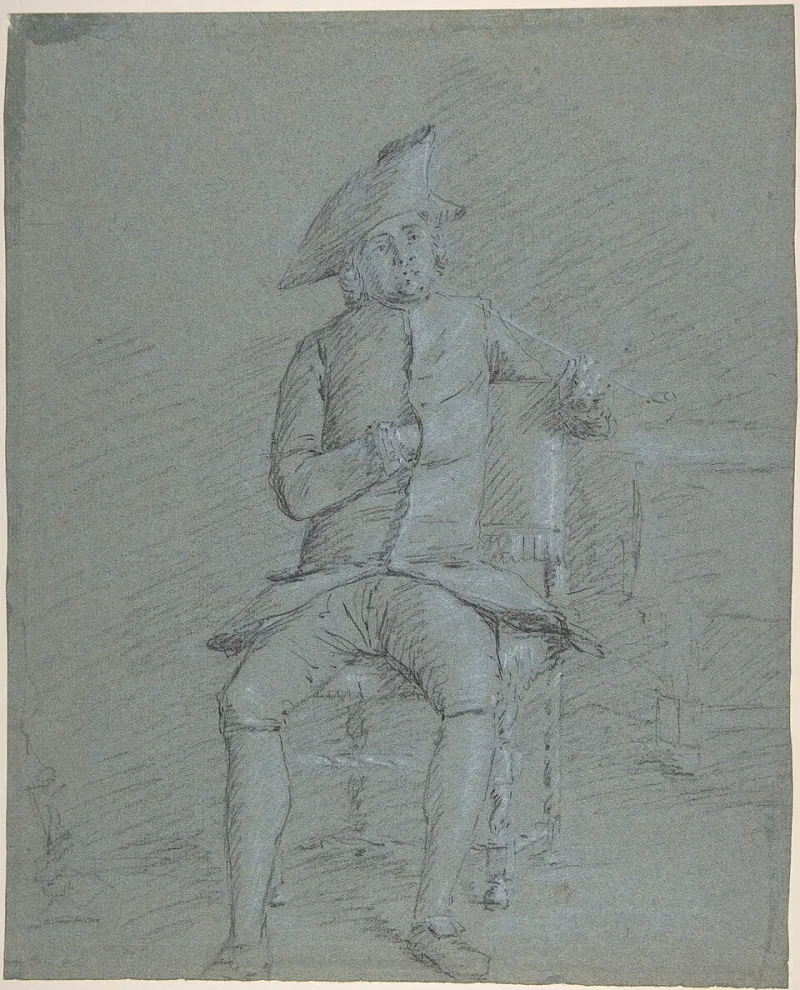
Photo: Creator:Francisco Bayeu y Subias, CC0, via Wikimedia Commons
There is a moment, familiar to every commuter who has sheltered beneath a crowded station canopy, when the rain begins in earnest and the crowd unfurls its defences. Watch carefully and you will see an entire social taxonomy laid bare. There is the man wrestling a tangled, wind-lashed umbrella from a petrol station — its ribs bent at angles that suggest a difficult past. Beside him stands another, opening a black canopy with a whisper of sprung steel, its handle worn smooth by years of use. Neither man says a word. Both understand exactly what has just been communicated.
The umbrella, for all its utility, is never merely a tool in Britain. It is a statement of intent.
The Unspoken Hierarchy
We are a nation that claims not to care about such things, and we are lying. The disposable brolly — purchased in haste from a newsagent when the heavens opened without warning — has its place, but that place is the bottom of the pyramid. It is the umbrella equivalent of a clip-on tie. It says: I did not plan for this country I live in.
At the other end of the scale sits the full-length stick umbrella, often with a handle of Whangee cane, chestnut wood, or horn. This is not fashion, exactly — it is infrastructure. A gentleman who carries a proper umbrella has made a small, daily decision that he will meet the weather on his own terms. In a country where rain is not an event but a background condition, that decision accumulates meaning.
Between these poles lies the folding umbrella: practical, pocketable, and judged almost entirely by its build. A well-made compact from a heritage maker earns quiet respect. A flimsy one bought at an airport is a coin toss.
What Survives a Proper Gust
Anyone who has battled a crosswind on an exposed platform knows that not all umbrellas are equal. If yours has ever inverted with a noise like a seagull in distress, take note of the following.
The frame is everything. Look for a forged steel or fibreglass rib construction rather than thin aluminium. Eight ribs is the standard; some serious models carry ten or more. Fibreglass flexes in gusts and returns to shape — steel can hold, but cheap steel simply bends.
The canopy fabric matters. A densely woven polyester with a proper waterproof coating will shed water rather than absorb it. Check the stitching at the ribs; loose threads at the seams are the first sign of a short life.
The shaft and handle should feel like one object. A solid shaft — wood or steel, not hollow tube — transmits a sense of quality you can feel the moment you lift it. The handle should sit comfortably in the palm for the length of a ten-minute walk, because that is its job.
Open it smoothly. A quality runner and spring will extend the canopy with a firm, decisive action. If it hesitates or jams, it will jam when you need it least.
For those willing to invest, the full-length models from the great British makers — the sort carried by generations of chaps outside Pall Mall clubs — remain the benchmark. A well-kept stick umbrella can last twenty years. Depreciated over two decades, it is cheaper than the pile of broken compacts it replaces.
Etiquette at Close Quarters
Ownership is only half the matter. Carry discipline is where reputations are truly made and lost.
On the train: a wet, furled umbrella is a weapon in the wrong hands. Carry it point-down, close to your leg, and never rest it across adjacent seats. If there is no stand or hook, place it between your feet — not on the luggage rack, where it will roll, and certainly not on the seat beside you, which is a declaration of war.
Indoors: shake it once, firmly, outside the door. A gentleman does not trail puddles through a lobby, nor does he perform an elaborate theatrical shaking routine. One decisive flick, then done.
In company: the umbrella belongs to you, not the group. Do not angle it so that your companion walks half-exposed; either share properly, centred, or each carry your own. And when passing through a crowd, raise your canopy slightly — a spoke at eye level is a hazard no one forgives.
When it breaks: retire it with dignity. A bent, mangled frame carried out of laziness undoes every good impression the umbrella previously earned you.
The Verdict
Judging a man by his umbrella may seem petty, but it is really a proxy for something larger: attention to detail, preparedness, an understanding of where one lives and what that demands. The British weather is indifferent to all of us. The response — a cheap scramble or a considered defence — is entirely our own.
Buy once, carry properly, and let the brolly do the talking. The rain, at least, will never be able to say it caught you out.