Fifteen Minutes of Shame: Fixing the Journey Between Changing Room and Street
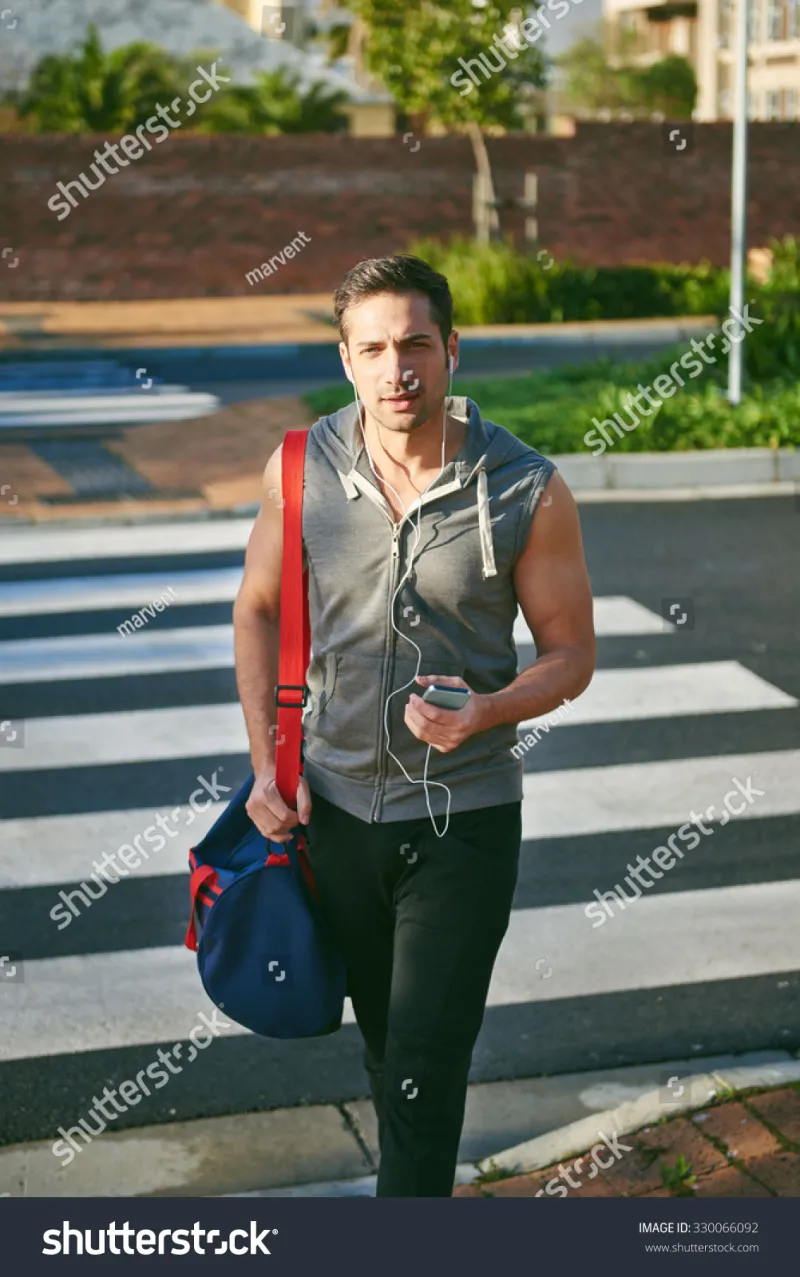
Photo: man leaving gym with rucksack on British high street morning, via www.shutterstock.com
There is a peculiar blind spot in the modern British gentleman's wardrobe, and it reveals itself most reliably between 7 and 9 in the morning, and again between 5 and 7 in the evening, outside any leisure centre in the land.
The man emerging from the gym has, in all likelihood, thought carefully about his training. He has researched the trainers. He may own moisture-wicking everything. Yet the moment he steps through the exit, he is transformed into a walking advert for surrender: oversized shorts worn in November, a gym-branded t-shirt stretched beyond recognition, and a towel slung round the neck like a surrender flag.
It need not be so.
The Transition Zone
Consider the other environments a man passes through on an ordinary gym day. The school run, perhaps. A coffee shop. The queue at the supermarket. The bus stop, exposed to a horizontal drizzle that no performance fabric was designed to repel.
These are the transition zones — the stretches of real life that sit either side of the workout — and they demand a different standard of dress than the treadmill does. The error is treating the entire outing as one continuous gym session. It is not. A man would not wear his swimming trunks to collect a prescription; the same logic should govern the rest of the kit.
The solution is not a second wardrobe. It is a small, deliberate rotation of what we might call transition pieces: garments chosen specifically to carry a man from changing room to street with his dignity intact.
Three Pieces That Do the Job
First, the mid-layer. A zip-through sweatshirt in plain navy, charcoal or forest green is the workhorse here. It pulls over damp shoulders without argument, packs into a bag without complaint, and looks entirely at home in a café. Avoid bold branding; the gym logo belongs inside the gym, not on the high street.
Second, the trouser question. Training shorts have their place, and that place is not the walk home in February. A tapered jogger in a heavier weight — think brushed cotton rather than shiny polyester — or a simple pair of slim sweatpants in a muted tone will read as intentional rather than accidental. If the morning involves the school gate, a pair of relaxed chino-style trousers with stretch will serve both masters.
Third, the footwear swap. The trainers that suit a squat rack rarely suit a coffee run. This is where the dedicated gym-goer has an excuse for a second pair: something clean, low-profile and leather-adjacent, kept in the bag and changed into with the same ritual as removing the lifting shoes. Two minutes of effort; a transformed impression.
The Bag Itself Deserves Thought
A rucksack with a dedicated wet compartment is worth the investment. There is nothing that undoes a considered outfit faster than a sodden towel pressed against clean clothing. The same goes for a small wash bag — deodorant, a flannel, a travel-size everything. British gyms are not renowned for their changing-room luxury, and a man who arrives at the office looking freshly assembled will be quietly judged well for it.
A Note on Weather
This being Britain, the transition zone includes the sky. A lightweight, packable shell jacket in a dark neutral belongs in every gym bag from September to May. It weighs nothing, costs little, and spares a man the spectacle of arriving at the school gates looking as though he has swum the channel to get there.
The Underlying Principle
None of this requires spending heavily. The transition wardrobe is, in truth, a matter of respect: for the people one passes, for the occasions one stumbles into, and for oneself. A man who dresses properly for the fifteen minutes around his workout signals that he takes the whole day seriously — not merely the hour he spends in front of a mirror at the squat rack.
The gym bag paradox dissolves the moment one accepts a simple truth: the workout ends at the changing room door. Everything after that is just getting dressed.