One Wrist, One Watch: The Case Against the Drawer of Compromises
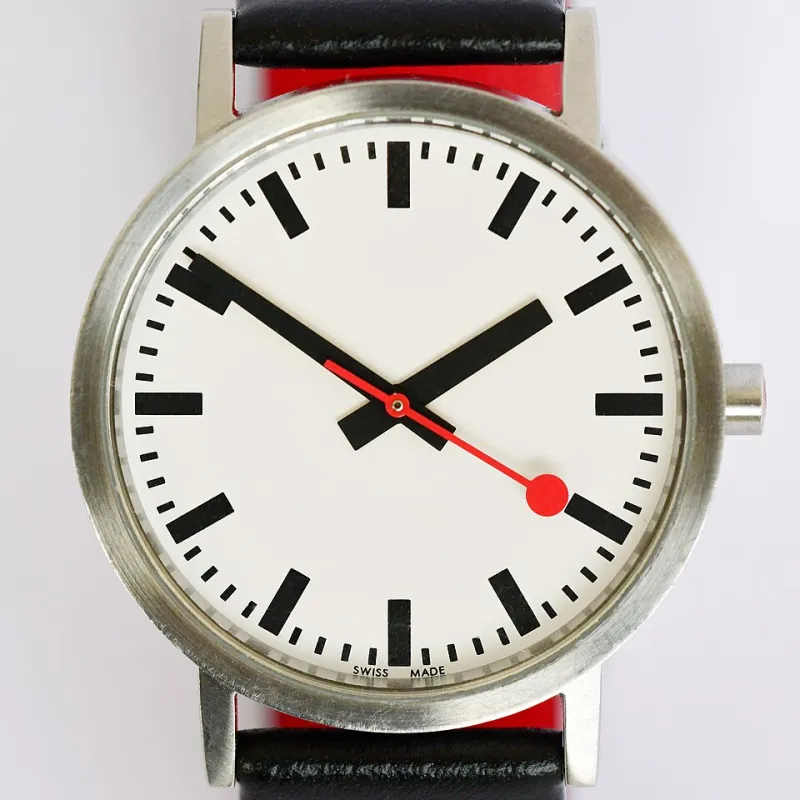
Photo: Alex P. Kok, CC BY-SA 4.0, via Wikimedia Commons
The Drawer Problem
Most men own watches the way they own umbrellas: several, all mediocre, none loved. There is the gifted one that doesn't quite suit, the cheap one bought for a wedding, the fitness tracker quietly resenting its position on the wrist. Open the average British gentleman's drawer and you will find a small museum of compromise.
We would like to advance a contrarian proposition: you need one watch. Not three, not a rotation of five — one. A signature timepiece, worn daily, becomes more than an accessory. It becomes part of how you are remembered.
Why One Watch Wins
A signature watch does several things a collection of compromises cannot. It develops a patina — literal and figurative — that ties it to your history. The scratched clasp from that trip to Edinburgh, the strap darkened by a decade of wear: these are details no new purchase replicates. Colleagues and friends begin to register the watch as part of you, the way they register your handwriting.
There is also a practical argument. A £1,200 watch worn every day for ten years delivers better value and more pleasure than four £300 watches worn occasionally and resented collectively. Consistency, in timekeeping as in tailoring, is a form of refinement.
The British Inheritance
British men are unusually well served here. The nation that gave the world the marine chronometer — John Harrison's clocks that conquered longitude — retains a watchmaking heritage worth celebrating. Roger Smith, on the Isle of Man, produces what many consider the finest hand-finished watches in the world, at prices that place them firmly in the aspirational category. Bremont, in Henley-on-Thames, builds robust, aviation-inspired pieces with genuine British assembly. For those further down the ladder, Marloe Watch Company in Scotland and the ever-dependable Christopher Ward offer remarkable specification per pound.
There is also a thriving vintage market. A 1960s Smiths — the brand that equipped Everest expeditions — can be found for a few hundred pounds, and carries more character than most new watches at ten times the price.
Matching the Watch to the Man
Before price, answer two questions. First, what does your wardrobe look like? A man in suits five days a week is served beautifully by a 36–39mm dress watch on leather — simple dial, no complication shouting for attention. A man in chore jackets and denim wants something sturdier: a field watch or a dive-style piece on a steel bracelet or NATO strap. The watch should look like it belongs to the clothes, not to a catalogue.
Second, what is your daily reality? If you type for a living, a slim case sits better under a cuff. If you are frequently outdoors or on sites, consider shock resistance and water resistance above aesthetics.
The Buyer's Checklist
Before committing, run any candidate through this list:
- Size: Case diameter between 36mm and 40mm suits most British wrists; lug-to-lug matters more than diameter alone.
- Movement: A reputable automatic (Sellita, Miyota, or in-house) or a well-served hand-wound movement. Avoid unbranded quartz at premium prices.
- Versatility: Can it wear a second strap? A leather strap for evening and a steel or fabric strap for daytime effectively give you two watches.
- Serviceability: Choose a brand with UK service support. A watch is a twenty-year relationship, not a season.
- Restraint: If the dial needs explaining, it is probably too much.
What Each Budget Buys
At £100–£300, Seiko, Timex and Christopher Ward deliver honest, handsome watches. At £500–£1,500, you enter serious territory: Hamilton, Tissot, and entry-level Christopher Ward automatics with sapphire crystal and Swiss movements. At £2,000–£5,000, the likes of Sinn, Oris and Bremont offer genuine tool-watch pedigree. Beyond that, Omega and Rolex await — and a pre-owned Omega Seamaster remains one of the great value propositions in horology.
Wear It Like You Mean It
Whatever you choose, the final instruction is the simplest: wear it. Every day, every outfit, every weather. A signature watch is not a decoration for special occasions; it is a quiet statement of intent, ticking away on the wrist of a man who has made up his mind.