Best Clothes, Worst Timing: The Great British Wardrobe Misallocation
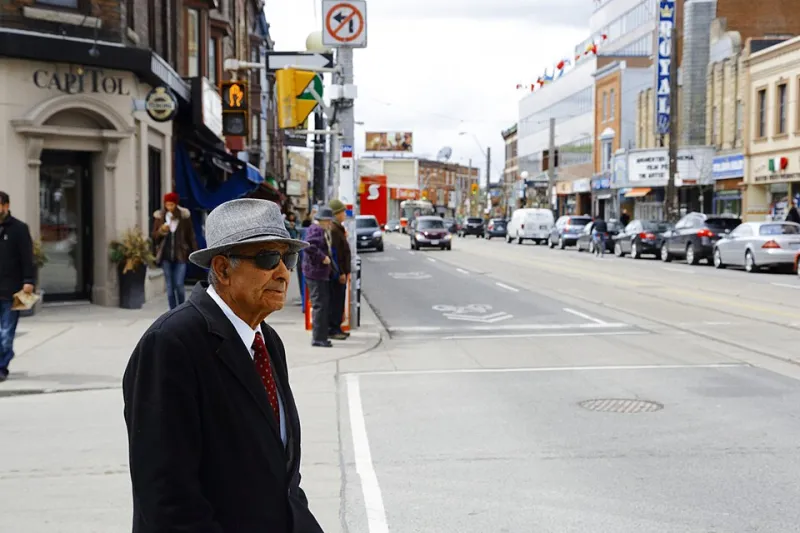
Photo: Simon Carr from Canada, CC BY-SA 2.0, via Wikimedia Commons
There is a particular absurdity on display every weekday between 8:25 and 8:45am at school gates across Britain. Grown men — men who own beautiful navy blazers, flannel trousers and shoes that cost more than a family weekly shop — standing in the drizzle in gym shorts and a faded technical t-shirt, discussing parents' evenings and half-term plans in what can only be described as loungewear with delusions of practicality.
The same man, mind you, will wear that navy blazer twice a year: once to a wedding in June, once to a christening in October. Between those appearances it hangs in a garment bag like a museum exhibit, admired but never touched.
This is not a style problem. It is a logistics problem. And it is entirely fixable.
The Wedding Trap
Most British men operate on a simple, unspoken rule: smart clothing is for occasions. Not occasions in the loose sense — occasions in the narrow, invitation-bearing sense. A suit is for a wedding. A good coat is for church. A crisp shirt is for a funeral or a milestone birthday. Everything else falls to the jeans-and-hoodie coalition.
The result is a wardrobe in permanent imbalance. Your finest pieces enjoy a wear-rate so low that their cost-per-wear runs into three figures, while your worst pieces — the pilling joggers, the concert t-shirt from 2011 — are worn to the point of disintegration. We have, collectively, decided to dress our worst on the days we actually live, and our best on the handful of days we merely attend.
Consider what the wardrobe is actually for. Not for photographs. Not for other people's ceremonies. It exists to clothe you through your ordinary week — the meetings, the school run, the pub, the dinner reservation you made three weeks ago and nearly cancelled. If your best clothes never appear on those days, your wardrobe is failing at its one job.
Where the Good Stuff Should Go
The remedy is not to wear a three-piece suit to Tesco. It is to redistribute intelligently — to let the quality trickle down into ordinary life.
The school run. Nobody is suggesting tweed at 8:30am. But a pair of proper trousers — moleskin, heavy cotton, flannel — with a decent knit and a weatherproof jacket transforms the whole exercise. You will still be late. You will simply be late, well dressed.
The work meeting you could have been an email at. The unstructured blazer is the great underrated tool here. Throw it over almost anything and the outfit reads considered rather than accidental. It costs you nothing in comfort and buys you an enormous amount in how you are treated — by colleagues, by clients, by the barista who now remembers your order.
The dinner reservation. A restaurant you booked in advance has earned better than the outfit you wore to vacuum the car. Dark jeans are the floor, not the ceiling. A proper shirt, a jacket, clean leather shoes — this is not effort. This is the bare minimum of courtesy to the establishment and to the person sitting opposite you.
The school parents' evening. Arguably the highest-stakes low-stakes event in the British calendar. Fifteen minutes with a form tutor, judged entirely on appearance and one carefully worded question. Wear the jumper you'd wear to a nice lunch. It costs you nothing and signals everything.
Making Smart Feel Ordinary
The resistance, of course, is psychological. Smart clothes feel like costumes precisely because we wear them so rarely. The solution is exposure — deliberate, repeated wearing until the blazer feels as unremarkable as the hoodie.
Start with the laundry rule: if it can survive a gentle wash or a trip to the dry cleaner without drama, it is fair game for a Tuesday. Choose pieces with that everyday resilience in mind. Wool trousers rather than anything precious. Knitwear in lambswool or merino that shrugs off a bit of rain. Shoes in rubber-soled leather — derbies, loafers, chukkas — that handle pavement and pub floor with equal indifference.
Then impose a simple quota. One piece of genuinely good clothing per ordinary day. Not a full suit — a single item of quality promoted from the wedding wardrobe to the weekday rotation. The blazer on Monday. The good scarf on Wednesday. The proper coat whenever it is cold, which in Britain is most of the time.
Within a month, something curious happens. The good clothes stop feeling like an event and start feeling like yours. The suit in the garment bag loses its ceremonial weight. And you discover, rather belatedly, that looking well put-together on an ordinary Wednesday is one of the cheapest and most reliable pleasures available to a man.
An Argument, Briefly Made
Nobody lies on their deathbed wishing they'd saved the blazer for one more christening. Your clothes should serve the life you have, not the life that arrives by invitation only. The suit you love deserves better than two outings a year — and frankly, so do you.
Open the wardrobe this weekend. Find the best thing in there. Wear it tomorrow. Not to a wedding. Not to an occasion. To the school run, or the office, or the curry on Friday. That is what it was made for.