Counting Sheep: A Honest Reckoning With Cashmere, Lambswool and Merino
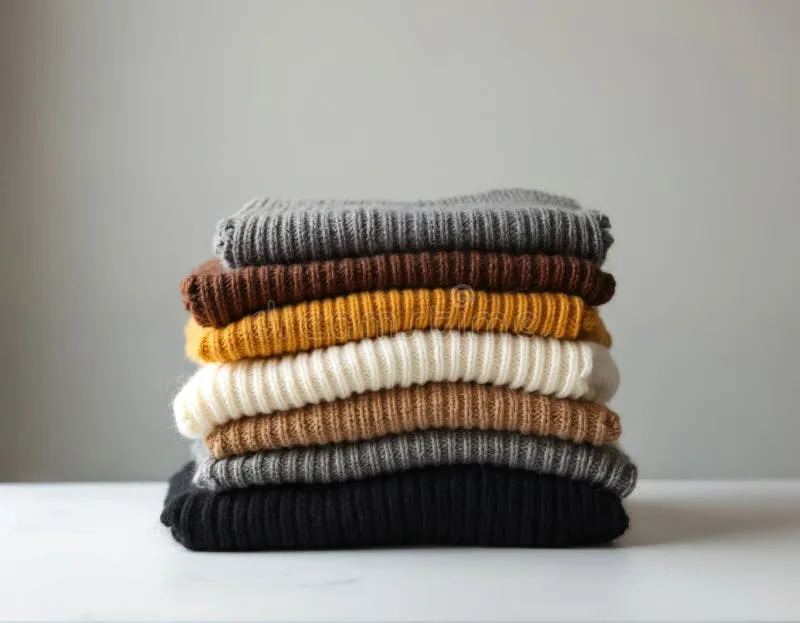
Photo: folded knitwear jumpers lambswool cashmere neutral colours flat lay, via thumbs.dreamstime.com
There is a moment, usually in late October, when the British man reaches for a jumper and realises the one he bought last year has already given up. The cuffs have sagged, the hem has lost its spring, and there is a fine mist of bobbles across the chest that no amount of defuzzing will fully reverse. It is a small domestic tragedy, repeated in wardrobes from Aberdeen to Arundel.
The fault rarely lies with the wearer. It lies with the fibre — and, more often than not, with a failure to understand what the label was quietly telling us all along.
Know Your Fibres Before You Part With Your Money
Three fibres dominate the British knitwear rack, and each has a distinct character, a distinct price point and a distinct job to do.
Lambswool is the workhorse. Sheared from a lamb's first fleece, it is denser and hardier than adult wool, with a natural crimp that gives it remarkable resilience. A good lambswool jumper — the kind Yorkshire mills like those in the Pennines have produced for generations — will shrug off a bracing walk on the Moors and a decade of regular wear. It is not the softest fibre on the shelf, but it asks for very little and gives a great deal. Expect to pay between £60 and £150 for something respectable; anything under £40 deserves scrutiny.
Merino is lambswool's refined cousin. The fibre is finer, which translates immediately into softness against the skin — no itch, no prickle. This is the fibre for the fine-gauge crew neck worn under a jacket, the piece that works in a warm office and on a cold platform at Euston alike. Its weakness is durability: a 17.5-micron merino is a luxury; a 22-micron merino is a sensible daily companion. Check the label — the lower the micron count, the finer and more fragile the yarn.
Cashmere is the one that divides opinion. Genuine cashmere, combed from the undercoat of Central Asian goats, is extraordinarily soft and light, but it is also the most abused word in menswear. A £50 'cashmere blend' from a fast-fashion retailer is rarely a bargain; it is often a short-fibre yarn spun thin and destined to pill within weeks. Quality cashmere — longer fibres, higher ply, responsibly sourced — starts around £180 and climbs well beyond. It is an investment, not an impulse.
Decoding the Label Like a Grown-Up
The label tells you more than the price tag ever will. Look for:
- Yarn ply: two-ply or greater generally means a denser, longer-lasting knit. Single-ply cashmere is gossamer-thin and wears accordingly.
- Fibre length: longer fibres pill less. Brands proud of their yarn will usually say so.
- Country of spinning and finishing: 'Made in Scotland' carries genuine weight, but 'woven in Italy from Mongolian fibre' can be equally legitimate. What matters is that the supply chain is stated at all.
- The composition percentage: a 'cashmere touch' jumper is marketing, not knitwear.
High Street or Heritage?
There is no shame in the high street, provided you shop with your eyes open. The supermarkets and mid-market chains have improved enormously, and a well-chosen merino at £45 can outperform a carelessly made cashmere at £90. The heritage end — the Scottish and northern English mills, many of them family-run for generations — offers something the high street cannot: full-fashioned construction, where each panel is knitted to shape and linked by hand, rather than cut and sewn from a flat panel. Turn a jumper inside out. If the seams are bulky and overlocked, it is a shortcut knit. If they are flat and neat, someone took their time.
Care: The Difference Between a Season and a Decade
Most British knitwear is not worn out; it is washed to death. The rules are simple and almost universally ignored.
Wash knitwear rarely — after five or six wears at most, and less for wool. Use cool water and a pH-neutral detergent, and never the tumble dryer, which is to knitwear what a bonfire is to a letter. Dry flat, away from radiators, reshaping gently by hand. Fold rather than hang; hangers stretch shoulders irreversibly. And invest in a proper cashmere comb or lint shaver to lift pills before they become holes.
For storage, moths remain the gentleman's quiet adversary. Clean garments before the summer, store in breathable bags with cedar blocks, and check in September. A single moth season can undo five years of careful ownership.
The Verdict
If you own one jumper, make it lambswool — it will outlast everything else in the drawer. If you own three, add a merino for the smarter, finer occasions. Cashmere comes last, and only when you are prepared to buy properly once rather than cheaply repeatedly.
That, in the end, is the entire philosophy of good British knitwear: buy the best fibre you can afford, understand what it needs, and it will see you through twenty winters. Anything less is merely padding out the cold months.