Read From the Ground Up: What a Man's Shoes Say Before He Speaks
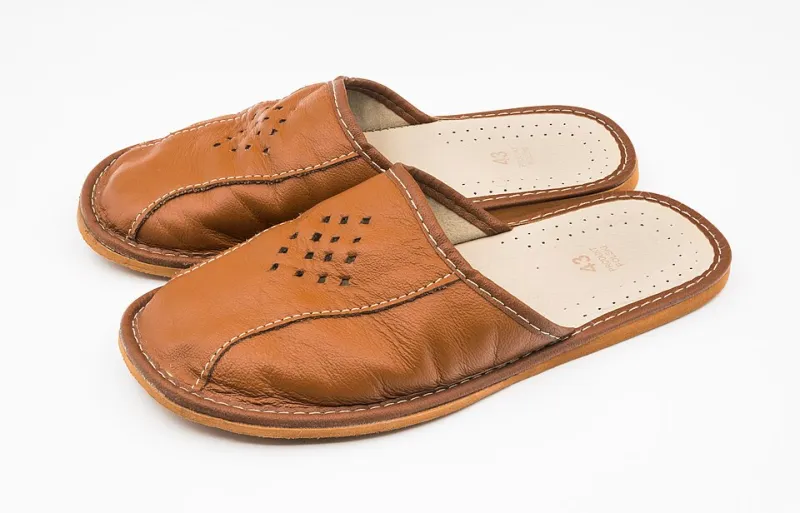
Photo: Jacek Halicki, CC BY-SA 4.0, via Wikimedia Commons
There is a ritual familiar to anyone who has ever interviewed a candidate, greeted a blind date or waited at the altar for a groom to arrive: the glance downward. It is not rudeness. It is assessment. In Britain, where we are raised to distrust flashiness and prize understatement, the shoes have become the most reliable tell a man offers. A sharp jacket can be borrowed. A watch can be inherited or, more commonly, faked. But the state of a man's shoes — their cleanliness, their appropriateness, their wear — is almost impossible to disguise.
The Honesty of Leather
Consider the interview scenario. A candidate arrives in a well-cut suit, crisp shirt, firm handshake. Then the eye travels down to a pair of trainers, scuffed at the toe, laces greyed with wear. Whatever the intention — comfort, habit, a rushed morning — the message received is one of carelessness. The suit says effort; the shoes say the effort stopped at the ankle.
The reverse holds equally true. A modest high-street suit paired with polished, properly maintained derbies reads as a man who understands that presentation is a whole enterprise, not a torso-length one. Shoes are where the detail-obsessed are separated from the aspirational.
The Dead Weight Problem
Most British wardrobes suffer not from a shortage of shoes but from an excess of the wrong ones. The novelty loafer bought for a stag do in Magaluf. The white trainers worn to the point of beige. The 'smart' shoe that is neither boot nor brogue, some synthetic compromise that photographs poorly and wears worse.
Honesty demands a cull. A shoe that has not left the house in eighteen months is not a wardrobe staple; it is clutter with laces. Better to own four pairs you actually wear than nine you negotiate with every morning.
The Rotation That Earns Its Keep
Ranking the essential British shoe cupboard, from non-negotiable to optional:
1. Dark brown leather derbies. The workhorse. Smart enough for the office, forgiving enough for the pub, dark enough to survive a funeral and a first date in the same month. If you own one pair of proper shoes, it is this one.
2. Black oxfords. Reserved for the most formal occasions — black tie adjacent events, solemn ceremonies, the kind of dinners where the dress code says 'black tie optional' and means it. Neglected by many, indispensable when needed.
3. White leather trainers, pristine. The modern concession, and a legitimate one — provided they are genuinely clean. There is a narrow and important gap between the minimalist trainer worn deliberately and the gym shoe worn by default. The former is style; the latter is surrender.
4. Suede chukka or desert boots. The great leveller of British casual dress. Jeans, chinos, corduroy — the chukka answers them all. Its only enemy is a week of rain, which in this country is a considerable enemy indeed.
5. Brogues. The decorative flourish of the rotation. The perforated detailing lifts a plain outfit and nods to our own sartorial heritage — the brogue was born on the boggy ground of Scotland and Ireland, punched with holes to drain water that no gentleman's shoe should have been wading through in the first place.
6. Loafers. Summer's reward. Worn with or without socks (the latter only in genuinely warm weather, and never in the office), the loafer signals a man at ease. Dead weight only when bought in novelty colours.
Maintenance Is the Message
Here is the uncomfortable truth: the ranking matters less than the upkeep. A £90 pair of derbies, cleaned, conditioned and resoled when necessary, will outclass a £400 pair left to rot in a hallway. Cedar shoe trees, a monthly polish, a cobbler you know by name — these are the habits that separate the well-shod from the merely shod.
The CV may get you through the door. The shoes decide what happens once you're in it.