The Coat Is Furniture: How British Men Really Judge an Overcoat — Draped Over a Pub Bench
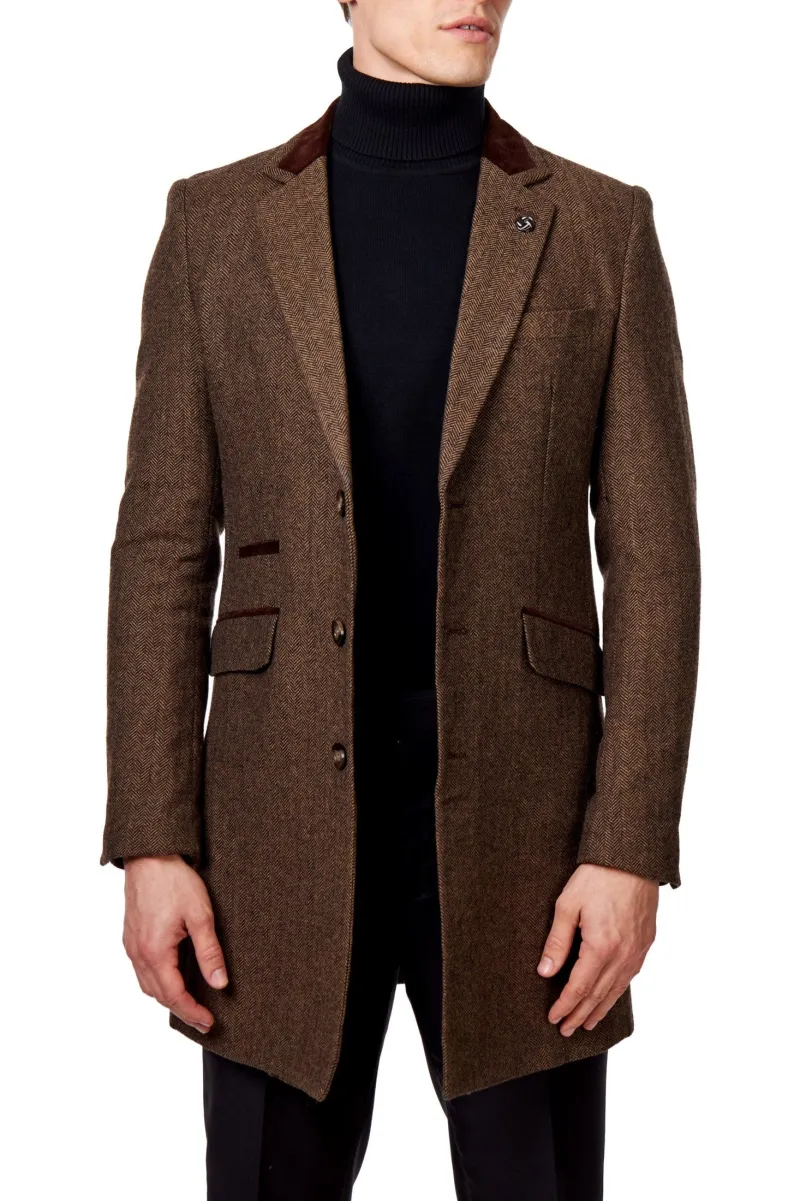
Photo: man's wool overcoat draped over wooden pub bench beer garden Britain, via www.xposedlondon.com
Ask a man why he bought his overcoat and he will tell you about the cut, the colour, perhaps the mill that wove the cloth. He is being polite. The honest answer, in most cases, is that he was thinking about the pub.
Because in Britain, a coat is not really a garment. It is furniture you happen to wear. It is a seat on a damp bench, a blanket on a late train, a bag when your hands are full, a pillow in the back of a taxi. No other item in a man's wardrobe is asked to work so hard while hanging off his shoulders — and no other item is judged so brutally the moment he takes it off.
The Bench Test
Consider the scene. A Sunday afternoon, a beer garden that hasn't dried out since April, and the only free bench is wet through. What happens next tells you everything about how British men relate to their outerwear.
The man in the waxed cotton drapes it over the slats without a second thought, because he knows the wax will shrug off the moisture and the cotton twill will brush clean when it dries. The man in the heavy wool overcoat hesitates, weighs his options, and then lays it carefully over the driest-looking corner, sleeves tucked in. The man in the flimsy high-street mac takes it off and holds it on his lap all afternoon, defeated.
Three coats, three entirely different relationships with the same wet bench. Only one of those men is genuinely relaxed.
Why Fabric Is the Whole Argument
This is where the choice of cloth stops being a matter of taste and becomes a matter of engineering. A coat that will spend a third of its life folded, draped, sat upon and slung over chair backs needs three properties that don't always appear on the label.
First, resilience. Dense wool — a heavy melton, a sturdy tweed, a tightly milled cashmere blend — has a natural spring to it. Crush it, and it recovers. Crease it across a chair back overnight and the crease will largely fall out by morning. Loose-weave or lightly constructed fabrics do not forgive; they hold the memory of every indignity.
Second, moisture tolerance. Wool absorbs a remarkable amount of water without feeling wet, and releases it again as it hangs. Waxed cotton, of course, repels it outright. What neither will do is stain or sag the way a coated synthetic can when condensation from a pint glass meets a shoulder seam.
Third, weight. This is the counterintuitive one. A proper coat — and we mean 600 grams of cloth and upward — has enough heft to drape rather than crumple. Light coats collapse into themselves like deckchairs. Heavy ones fold with intent, hold their shape on a bench, and look deliberate even when they're being used as a cushion.
Cut for Draping, Not Just Wearing
The construction matters as much as the cloth. A coat intended for real British life should have a few quiet hallmarks:
- A substantial lining, or none at all. A half-lined or quarter-lined coat in a dense wool wears better over a jumper and dries out faster when it's been hung in a steamy hallway. Fully lined coats trap damp against the cloth.
- Reinforced, generous pockets. A coat that functions as a bag needs pockets that won't split at the corners when loaded with gloves, a paperback and a dog lead.
- A collar that stands. When the coat is worn, the collar keeps the rain off. When it's draped, a good collar helps the whole garment hold a shape rather than slumping like a dropped sock.
- Buttons, not zips, at the front. A buttoned coat can be worn open, half-done or fully fastened, which matters when the British day swings from bright to filthy within an hour. Zips offer only two states, and neither suits a pub garden in October.
The Kitchen Chair Economy
There is a companion test to the pub bench, and it happens at home. Watch where a man puts his coat when he walks in. If it goes straight to a hook, fine. But if it lands on the back of a kitchen chair — ready for the school run, the dog walk, the corner shop — then that coat is living the life its maker intended.
Coats that survive this existence share one more trait: they are not precious. This is the quiet argument against buying fragile luxury. A coat that cannot be worn hard is a coat that will spend its life in a wardrobe, resenting you. Better a robust, honest cloth that improves with wear — a tweed that softens, a waxed cotton that takes on a patina at the elbows — than a delicate finish that shows a mark from its first night out.
Buying With the Bench in Mind
So, practically: when you next try on an overcoat, ignore the mirror for a moment. Fold one sleeve over the other. Scrunch a handful of the skirt and let go — does it spring back or hold the crease? Ask what the cloth weighs. Imagine it over a wet bench in November, because that is where it will spend its evenings.
The best British coats were never designed for the runway, and they were barely designed for the street. They were designed, whether the maker admits it or not, for the moment you arrive at the pub, find nowhere to sit, and make your own. Choose accordingly.