Two Lives, One Bag: Dressing for the Commute, the Treadmill and the Pint Afterwards
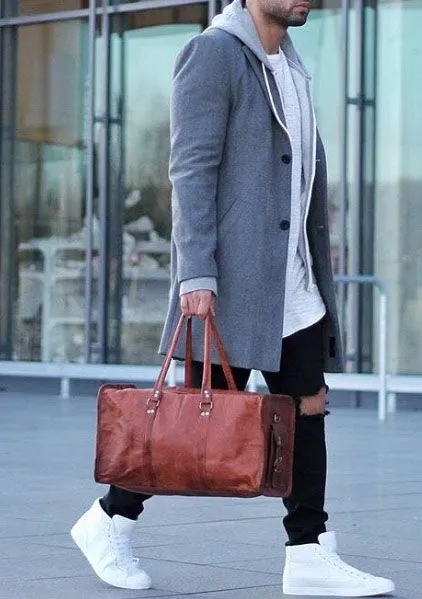
Photo: man gym bag commuter train london smart casual outfit, via i.pinimg.com
There is a particular sort of disappointment to be found on the 17:52 to East Croydon. A man sits down, gym bag wedged between his ankles, wearing a technical t-shirt that was designed to wick sweat on a treadmill but has spent the day doing nothing of the sort beneath an oxford shirt. His trousers — the same trousers — are cut for neither desk nor dumbbell. His trainers, chosen for the gym, are quietly ruining the line of an otherwise considered outfit.
He has, in effect, dressed for neither of his lives. And he is far from alone.
The Split-Shift Wardrobe Problem
The commute-to-gym routine is now a fixture of British working life. Offices with showers, lunchtime classes, the post-work session before meeting friends — the modern schedule asks a man to be presentable at his desk, functional on the machines and respectable at the bar, often within the space of six hours.
The typical response is compromise, and compromise in both directions. The office outfit gets stretched to cover the gym, arriving at the changing room in clothes never intended for movement. Or the gym kit gets stretched to cover the evening, leaving a man ordering a pint in moisture-managing polyester that flatters nobody under warm lighting.
The issue is not that suitable clothing doesn't exist. It's that most men have never assembled it deliberately. They own two wardrobes and no bridge between them.
What the Day Actually Demands
Strip the routine back and the requirements are refreshingly clear. Clothing must recover from being folded into a bag. It must resist creasing through a seated morning. It must tolerate movement — genuine movement — in the afternoon. And it must look intentional under the lights of a railway-adjancy pub at half past eight.
That is a demanding brief, but not an impossible one. The answer lies in a small capsule of pieces chosen for recovery: fabrics and cuts that return to shape, shed wrinkles and read as smart rather than sporty.
The Capsule: Seven Pieces That Do Everything
Merino base layers, plural. Merino remains the great overachiever of the transitional wardrobe. A fine-gauge merino crew handles a desk, a warm commute and a workout, then airs out overnight and does it again. It regulates temperature in a way cotton and synthetics cannot, and it looks like knitwear, not kit.
Technical-finish trousers with tailoring. The past five years have given us trousers cut like smart chinos but woven with stretch and moisture management. Brands across the price spectrum now offer them. Worn with a shirt, they pass at the office; worn with a tee, they pass anywhere else. This single purchase solves more problems than any other on the list.
An unstructured blazer in a knitted or stretch weave. The knitted blazer has quietly become the bridge garment of British menswear. It packs flat, shrugs off creases from a bag, and elevates a plain t-shirt into something that reads considered rather than thrown on.
One pair of clean, minimal trainers. Not running shoes — running shoes are performance equipment and look it. A simple leather or premium mesh trainer in white, navy or grey works for a light gym session, a full day of walking and an evening out. If your training is genuinely heavy, keep the proper kit at the gym and change there.
A merino or technical polo. The polo is the underrated hero here. Cut in a breathable fabric with a collar, it reads smart at a desk and breathes on the cross-trainer. Few garments manage the double shift with such little fuss.
A packable overshirt. For the cold platform and the draughty beer garden alike. Wool-rich, roomy enough to layer over everything above, and far more forgiving than a coat when the day's plans shift.
A proper bag. A structured backpack or holdall with a separate compartment for used kit. The single fastest way to ruin a good outfit is to let yesterday's session contaminate it, literally and olfactorily.
The Changing Room Is Not the Enemy
There is a stubborn machismo in British gym culture that treats changing as an admission of defeat — as though wearing the same clothes from desk to dumbbells proves something. It proves nothing except a failure of planning.
The men who look composed at 8pm are not the ones who never went to the gym. They are the ones who packed properly. Five minutes at the changing room, a merino tee out of the bag, the day's shirt folded away, and the evening begins on the front foot.
A Question of Respect
Ultimately this is not really about gym bags. It is about the old principle this magazine keeps returning to: that a man's clothes should serve the life he actually leads, not the life he imagines he might lead one day. For a great many British men, that life now includes a barbell before bedtime.
Dress for all of it. The treadmill deserves better than your Tuesday shirt — and your evening deserves better than your treadmill.